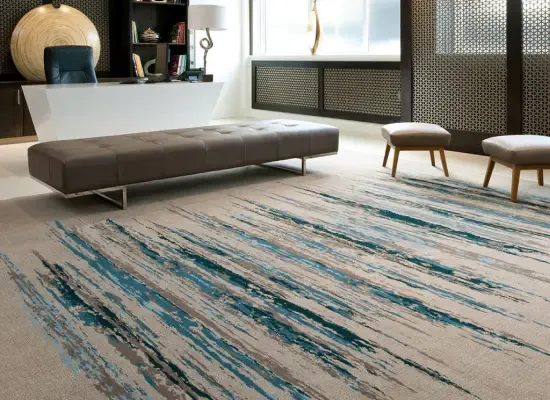
The Economics of Premium Wool Carpets in Corporate Headquarters
Corporate headquarters represent substantial long-term investments where material selection influences operational expenditure, workplace quality, and asset positioning. While flooring is often evaluated during initial construction or refurbishment budgeting, its financial implications extend well beyond installation.
For property developers, corporate real estate managers, and institutional investors, wool commercial carpet presents an opportunity to evaluate premium materials through a lifecycle investment perspective rather than initial purchasing costs alone.
Understanding replacement cycles, maintenance expenditure, and long-term performance helps decision-makers determine whether premium wool flooring aligns with their financial and operational objectives.
Why Premium Flooring Matters in Corporate Real Estate
Corporate headquarters serve multiple functions, accommodating employees, executive leadership, clients, and business partners. Flooring contributes to the appearance and functionality of these environments while representing a recurring component of property maintenance expenditure.
Connecting Material Quality With Asset Value
Premium materials can support a building's market positioning by maintaining a consistent architectural standard across reception areas, executive offices, and formal meeting spaces.
However, higher material costs do not automatically translate into increased property valuations.
The financial value of premium flooring depends on its ability to maintain acceptable performance, reduce avoidable replacement expenditure, and support the property's intended market positioning.
Developers evaluating commercial flooring strategies can explore Contempo Carpets' commercial enterprise carpet solutions for additional information on flooring requirements across professional environments.
Understanding Wool Flooring Lifecycle Cost
A comprehensive wool flooring lifecycle cost assessment examines all relevant expenses incurred throughout the flooring system's expected service life.
Initial procurement represents only one component of this calculation.
Key Components of Total Cost of Ownership
A practical total cost of ownership model should include:
-
Material purchasing and transportation expenses.
-
Installation labor and subfloor preparation.
-
Routine cleaning and periodic maintenance.
-
Localized repairs and replacement allowances.
-
Operational disruption during refurbishment.
-
End-of-life removal and disposal costs.
These expenses should be evaluated over a consistent period when comparing alternative flooring materials.
For example, a lower-priced carpet requiring replacement twice within a defined investment horizon may generate higher cumulative expenditure than a premium alternative requiring fewer interventions.
Actual outcomes depend on product specifications, traffic intensity, maintenance quality, and verified service-life expectations.
Evaluating Replacement Cycles and Long-Term Savings
Replacement frequency is one of the most influential variables in commercial flooring economics.
How Durability Influences Capital Expenditure
Wool fibers possess natural resilience, but carpet longevity depends on the complete construction, including pile density, backing, installation quality, and maintenance practices.
A properly specified corporate office wool carpet may retain its appearance over an extended period, potentially reducing the frequency of major flooring replacement projects.
Fewer replacement cycles can limit expenditure on materials, labor, furniture relocation, and temporary workspace restrictions.
For a broader examination of material characteristics, Contempo Carpets' guide to the investment benefits of wool commercial carpets provides additional technical and performance considerations.
Comparing Wool and Synthetic Carpet Investment Scenarios
Wool and synthetic commercial carpets should be compared using equivalent performance requirements and realistic maintenance assumptions.
A Practical Total Cost of Ownership Model
Consider a hypothetical 1,000 m² corporate flooring project evaluated over 15 years.
The appropriate financial model should calculate discounted future expenditure rather than relying exclusively on purchase prices.
A simplified framework is:
TCO = Initial Installation + Maintenance + Replacements + Operational Disruption + Disposal Costs
For investment-grade assessments, future costs should be discounted to present value using an appropriate financial rate.
Maintenance Planning and Operational Efficiency
Even premium flooring materials require structured maintenance to preserve their intended performance.
Protecting Long-Term Material Value
Routine cleaning, entrance protection systems, appropriate stain treatment, and periodic inspections can help reduce premature deterioration.
Maintenance budgets should reflect manufacturer recommendations and actual occupancy patterns rather than generic cleaning schedules.
Detailed performance specifications also support more reliable procurement decisions. Contempo Carpets' commercial carpet specifications guide outlines important technical considerations for demanding commercial environments.
Choosing the Right Flooring Strategy for Corporate Headquarters
Not every area within a headquarters requires the same flooring investment.
Premium wool may be appropriate for executive suites, boardrooms, and representative spaces where appearance and material quality are significant priorities.
Alternative constructions may offer greater financial efficiency in selected high-traffic or frequently reconfigured areas.
For additional comparisons between installation formats, the broadloom carpet versus carpet tiles guide provides useful insight into maintenance flexibility and commercial performance.
Evaluating Wool Carpets as Long-Term Assets
The economics of premium wool carpeting extend beyond initial procurement costs. Replacement frequency, maintenance expenditure, operational disruption, and architectural consistency collectively determine long-term investment performance.
For developers and corporate property owners, selecting wool commercial carpet should involve documented technical specifications and a project-specific financial assessment.
Planning a corporate flooring investment? Contact Contempo Carpets to discuss premium wool flooring options, project specifications, and the information required to evaluate total cost of ownership.