Enhancing Cinema Interiors with High-Performance Acoustic Carpets
Cinema interiors are designed to deliver immersive audiovisual experiences while maintaining comfort, safety, and operational efficiency. Every architectural element contributes to the overall environment, from seating arrangements and wall treatments to flooring materials and acoustic finishes.
In modern theaters, controlling unwanted noise is essential for preserving sound clarity and minimizing distractions during screenings. High-performance acoustic carpets can support these objectives by reducing footfall noise, improving underfoot comfort, and contributing to the acoustic characteristics of interior spaces.
For architects and design studios, understanding how carpet construction influences sound absorption and impact noise helps establish flooring specifications that complement professional cinema acoustic systems.
Why Acoustic Flooring Matters in Cinema Design
Cinema environments require carefully controlled sound conditions to support dialogue intelligibility, dynamic audio reproduction, and audience immersion.
Unwanted noise from pedestrian movement, seating areas, corridors, and adjacent circulation spaces can interfere with the viewing experience.
Understanding Impact Noise and Sound Absorption
Carpet flooring contributes to acoustic performance through two primary mechanisms.
Impact noise reduction addresses sounds generated by footsteps and other physical contact with flooring surfaces.
Sound absorption concerns the ability of materials to absorb portions of incident airborne sound energy rather than reflecting it into the surrounding environment.
Although carpets can contribute to both, their effectiveness depends on construction, backing systems, underlay materials, and installation conditions.
A movie theater acoustic carpet should therefore be evaluated using relevant acoustic test results rather than general assumptions about textile flooring.
Selecting Carpet Construction for Acoustic Performance
Different carpet constructions provide varying combinations of sound absorption, durability, and surface comfort.
Pile Height, Density, and Backing Systems
Pile height and fiber structure influence how sound interacts with the carpet surface.
Thicker textile constructions and suitable underlays may improve certain acoustic properties, although performance varies by frequency and installation configuration.
Carpet backing and underlay systems also influence impact sound insulation and overall flooring stability.
Architects should evaluate the complete installed assembly, including the substrate, rather than comparing surface materials independently.
For additional technical considerations, Contempo Carpets' commercial carpet specification guide provides guidance on construction and performance requirements.
Acoustic Carpet Applications Across Cinema Interiors
Cinema complexes contain several functional zones with different acoustic and operational priorities.
Auditoriums, Aisles, and Circulation Areas
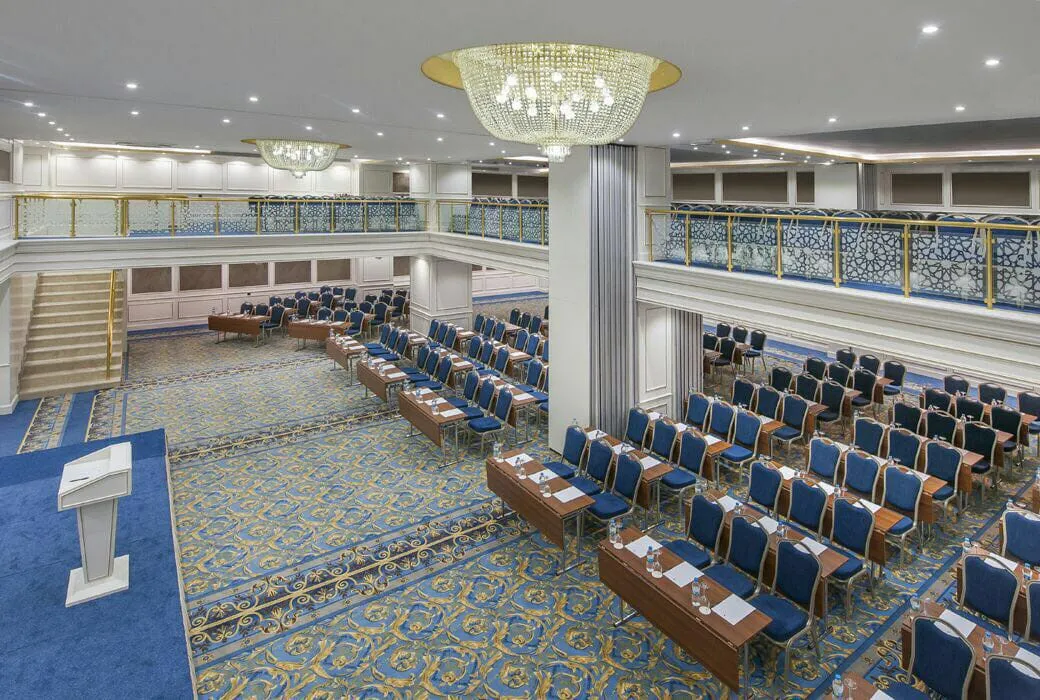
Within auditoriums, carpeted aisles and selected floor areas can help reduce noise generated by audience movement.
Lobby corridors and circulation routes may benefit from flooring designed to limit footfall noise while accommodating substantial visitor traffic.
Premium screening rooms and private viewing suites may prioritize additional comfort and coordinated interior aesthetics.
For broader entertainment applications, Contempo Carpets' entertainment industry carpet solutions explores flooring approaches for cinemas, theaters, and other leisure venues.
Integrating Carpet With Cinema Acoustic Design
Flooring should form part of a coordinated acoustic strategy that includes wall treatments, ceiling systems, seating, and architectural isolation.
Evaluating Acoustic Test Results
Design teams may review laboratory measurements such as sound absorption coefficients and impact sound insulation results.
ISO 354 provides a recognized method for measuring sound absorption in a reverberation room, while ISO 10140 includes laboratory methods for assessing sound insulation of building elements.
The appropriate test method depends on the acoustic property being evaluated.
Carpet performance should be assessed against project-specific acoustic objectives established by the responsible consultant.
Balancing Acoustic Performance With Commercial Durability
Cinema carpets experience repeated pedestrian traffic, food and beverage spills, cleaning operations, and concentrated wear along aisles.
Maintenance and Appearance Retention
Suitable flooring specifications should consider abrasion resistance, pile resilience, stain-management requirements, and compatibility with commercial cleaning procedures.
Low-profile, dense constructions may offer practical advantages in busy circulation areas, provided that acoustic requirements are also satisfied.
Architects should also consider applicable fire classifications, accessibility requirements, and installation conditions.
For additional material-selection guidance, Contempo Carpets' broadloom carpet versus carpet tiles comparison examines practical differences between commercial flooring formats.
Custom Design for Modern Entertainment Venues
Cinema interiors increasingly incorporate distinctive architectural identities, coordinated lighting, and branded design elements.
Combining Visual Identity With Acoustic Functionality
Custom carpet patterns can reinforce spatial organization while complementing seating layouts and decorative finishes.
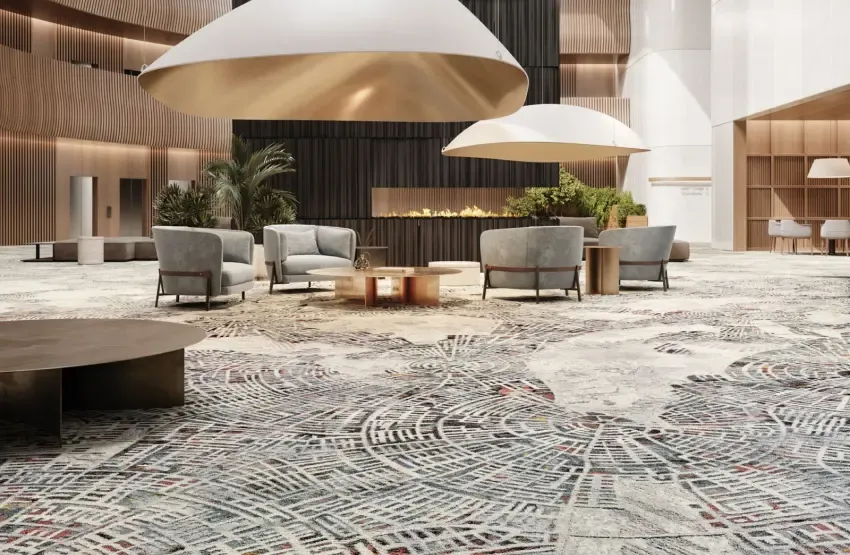
Dark palettes, controlled geometric patterns, and textured surfaces may help establish sophisticated interiors without competing with screen visibility.
Design teams can explore Contempo Carpets' carpet design collection for inspiration when developing project-specific entertainment flooring concepts.
Working With Contempo Carpets
Selecting appropriate acoustic flooring requires collaboration between architects, acoustic consultants, manufacturers, and installation contractors.
Contempo Carpets provides customized carpet solutions for entertainment environments, combining design considerations with commercial performance requirements.
Before finalizing specifications, project teams should request available acoustic documentation, material samples, construction details, and relevant fire-performance information.
Creating Better Cinema Experiences Through Flooring
High-performance acoustic carpets can contribute to quieter circulation areas, improved walking comfort, and more controlled interior acoustic conditions.
By evaluating acoustic test data alongside durability, maintenance, and architectural requirements, designers can develop flooring specifications appropriate for modern cinema environments.
Planning a cinema or entertainment project? Contact Contempo Carpets to request available carpet samples and technical information for your flooring requirements.